
Outdoor AC Unit Buzzing
A buzzing outdoor AC unit can mean something as simple as a loose panel or as serious as electrical arcing at the disconnect. The two sound similar from a few feet away but come from completely different places — and only one of them is a safety concern.
Where the sound is coming from, and whether there's a burning smell alongside it, tells you almost everything you need to know before a technician even arrives.
Texas HVAC License TACLB43277C.
What This Guide Covers
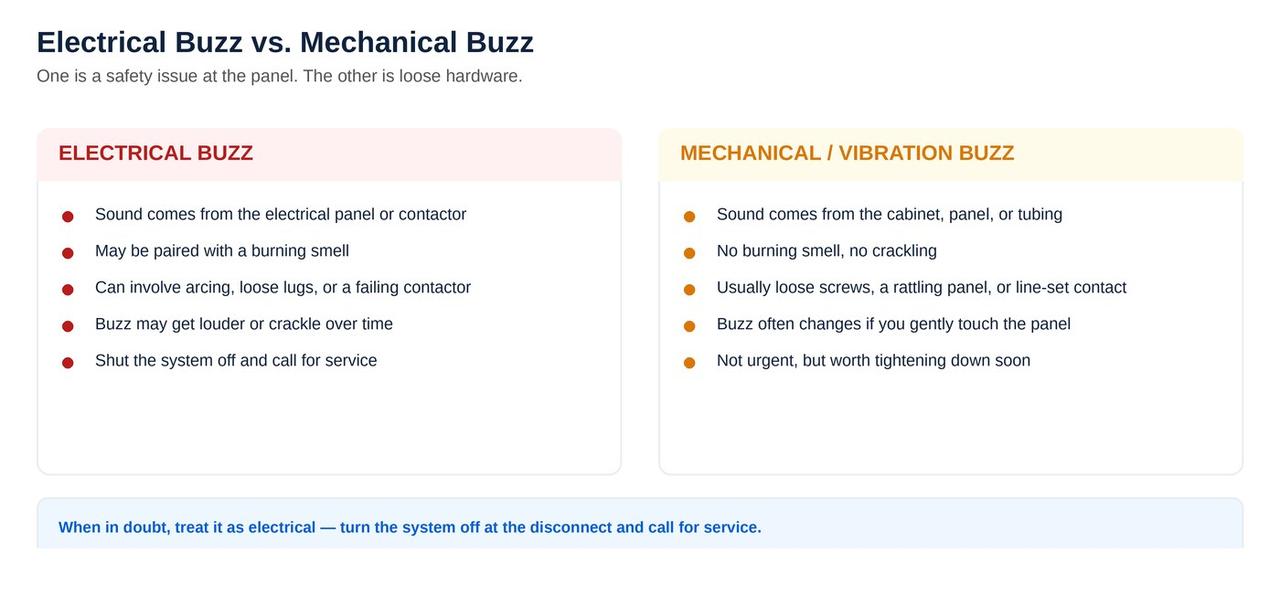
Electrical Buzz vs. Mechanical Buzz
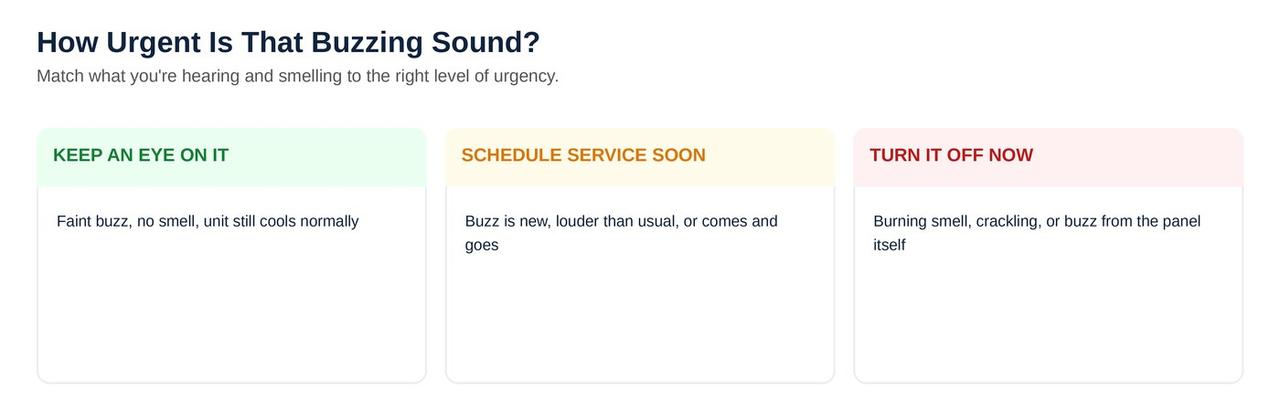
How Urgent Is That Buzzing Sound?
Common Causes of Outdoor Unit Buzzing
Pitted or Chattering Contactor
Worn contact points can buzz and arc as the contactor tries to engage.
Loose Electrical Connection
A loose lug or wire can arc under load and produce a buzzing hum.
Weak Run or Fan Capacitor
A failing capacitor can create an electrical hum along with humming from the motor itself.
Loose Cabinet Panel
Vibration from the fan or compressor can rattle an improperly secured panel.
Refrigerant Line Contact
A line touching the cabinet can transmit vibration as a buzzing sound.
Transformer Hum
Control transformers can produce a low electrical hum, usually minor.
How a Technician Diagnoses Buzzing
- Identify the exact sound location before touching anything electrical
- Inspect the contactor for pitting or chatter
- Check wire connections and lug tightness
- Test the capacitor
- Inspect cabinet panels and refrigerant line clearance
- Measure voltage and look for signs of arcing
How Buzzing Problems Are Repaired
- Replace a pitted or failing contactor
- Tighten or repair a loose electrical connection
- Replace a weak capacitor
- Secure a loose cabinet panel
- Reposition or insulate a vibrating refrigerant line
Repair or Replace?
Most buzzing causes are inexpensive repairs — a contactor, a capacitor, or a loose panel. Replacement becomes relevant only if the buzzing points to a larger compressor or electrical problem confirmed by testing.
Outdoor Unit Buzzing in Spring or The Woodlands?
AC Repair Expo Heating & Cooling Inc diagnoses electrical and mechanical noise throughout Spring, The Woodlands, Tomball, Cypress, Conroe, Humble, Kingwood, and nearby North Houston.
- Electrical safety inspection
- Contactor and capacitor testing
- Vibration and mounting checks
- Same-day diagnosis available
- Honest, tested recommendations
Frequently Asked Questions
Why is my outdoor AC unit buzzing?
Common causes include a pitted contactor, loose electrical connection, weak capacitor, loose panel, or a refrigerant line touching the cabinet.
Is a buzzing AC unit dangerous?
It can be, if the buzz comes from the electrical panel or is paired with a burning smell. Mechanical buzzing from a loose panel is usually not urgent.
Should I turn off a buzzing AC unit?
Yes, if you smell burning, hear crackling, or the buzz is clearly coming from the electrical panel.
Can a loose panel cause buzzing?
Yes. Vibration from the fan or compressor can rattle an improperly secured cabinet panel.
Can a bad capacitor cause buzzing?
Yes. A weak capacitor can create an electrical hum along with difficulty starting.
Is it safe to open the outdoor unit myself?
No. The electrical panel should only be opened by a licensed technician.
Can buzzing mean the compressor is failing?
It's possible, but a contactor, capacitor, or loose panel is far more common than compressor damage.
How much does it cost to fix a buzzing AC unit?
Most causes are inexpensive repairs like a contactor or capacitor replacement.
Does a transformer hum mean something is wrong?
Not necessarily. A faint transformer hum is common and usually minor.
Can refrigerant lines cause a buzzing sound?
Yes, if a line is vibrating against the cabinet.
Should I keep running the AC while it buzzes?
If there's any burning smell or the buzz is from the panel, turn it off. Otherwise it's reasonable to schedule service.
When should I call an HVAC technician?
Call when the buzz is new, gets louder, or is accompanied by any electrical smell or visible damage.