
Dirty Evaporator Coil Symptoms
A dirty evaporator coil is one of the most common — and most overlooked — causes of weak AC performance in Texas homes. A layer of dust and debris on the coil fins acts like insulation, choking airflow and dropping the coil's temperature low enough to freeze.
The symptoms often look identical to low refrigerant, which is why a lot of "recharges" don't actually fix the problem.
Texas HVAC License TACLB43277C.
What This Guide Covers
Symptoms of a Dirty Evaporator Coil
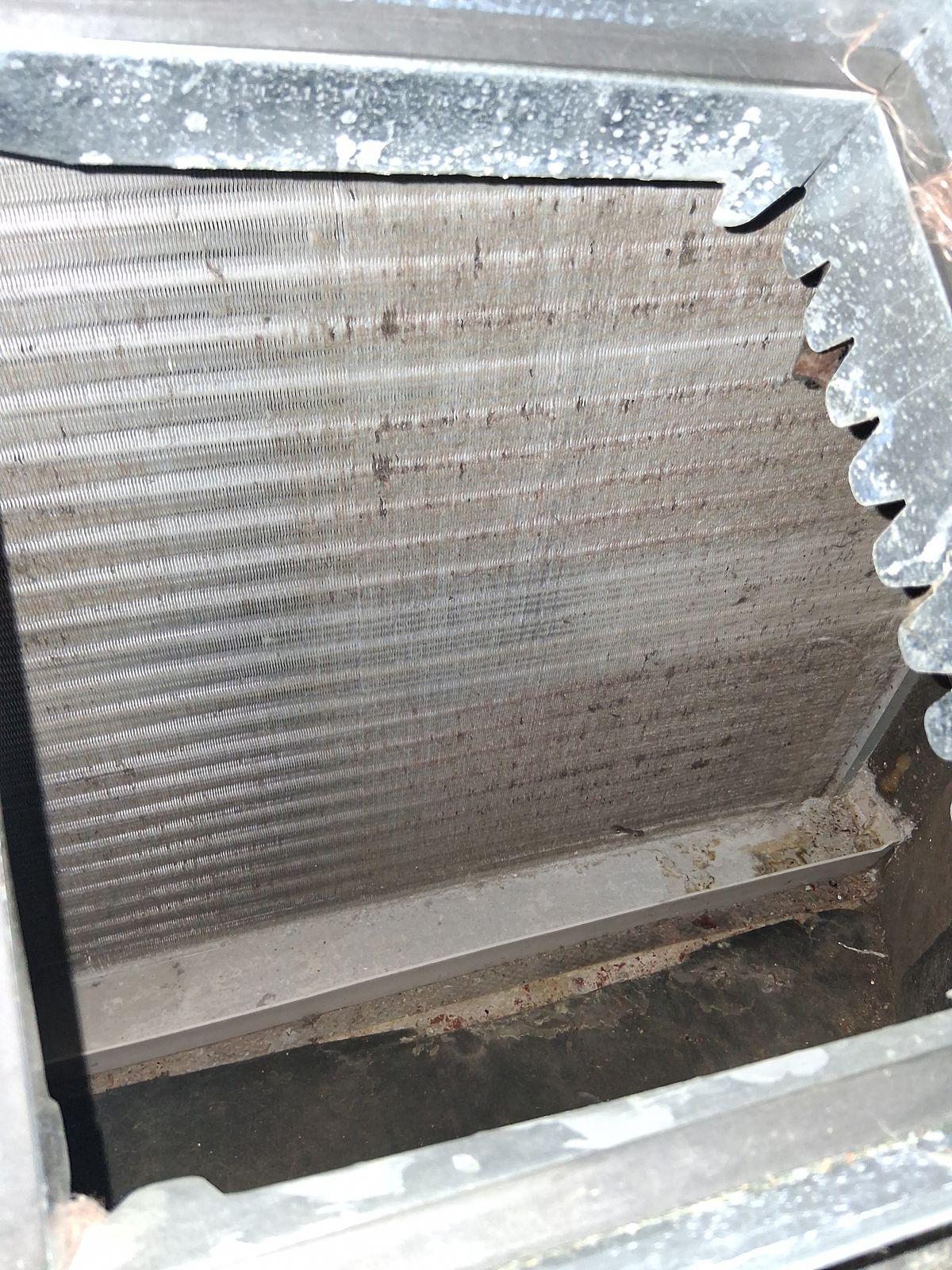
A real evaporator coil pulled from a Spring, TX system — years of dust buildup across every fin.
Weak or Warm Airflow
Vents may blow noticeably less cold air than usual.
Ice on the Coil or Lines
Restricted airflow can drop coil temperature below freezing.
High Indoor Humidity
A coil that can't function properly removes less moisture from the air.
Longer Run Times
The system works harder and runs longer to reach the same temperature.
Rising Electric Bills
Reduced efficiency means more energy for less cooling.
Musty Odor
Dirt and moisture buildup on the coil can create a noticeable smell.
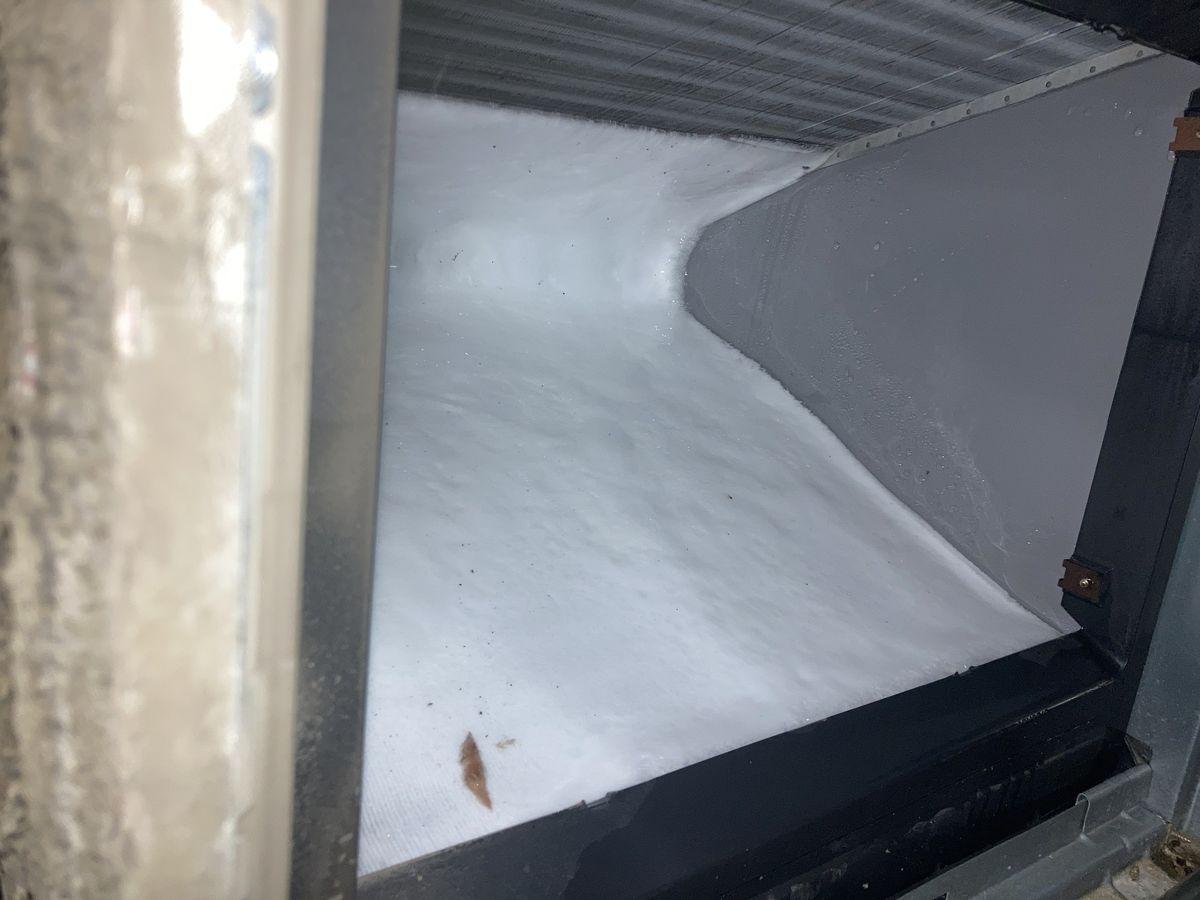
What weak airflow eventually leads to — a coil frozen solid, well past the early warning signs.
Why Evaporator Coils Get Dirty
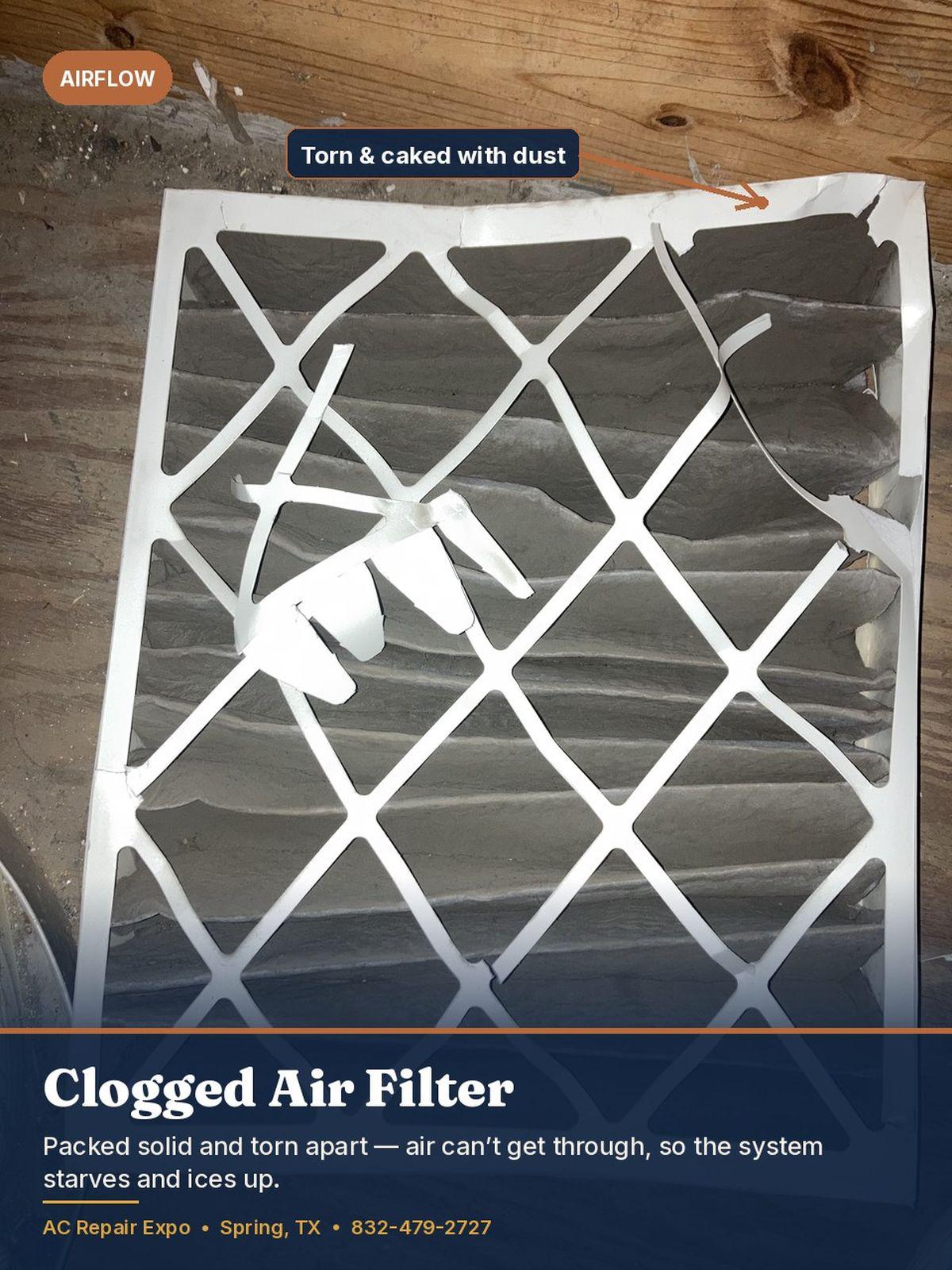
- Infrequent filter changes
- A filter with too low a MERV rating for the home
- Duct leaks pulling in unfiltered attic or crawlspace air
- Pets, dust, or construction debris in the home
- Normal accumulation over years without a cleaning
How Dirt Actually Blocks Airflow
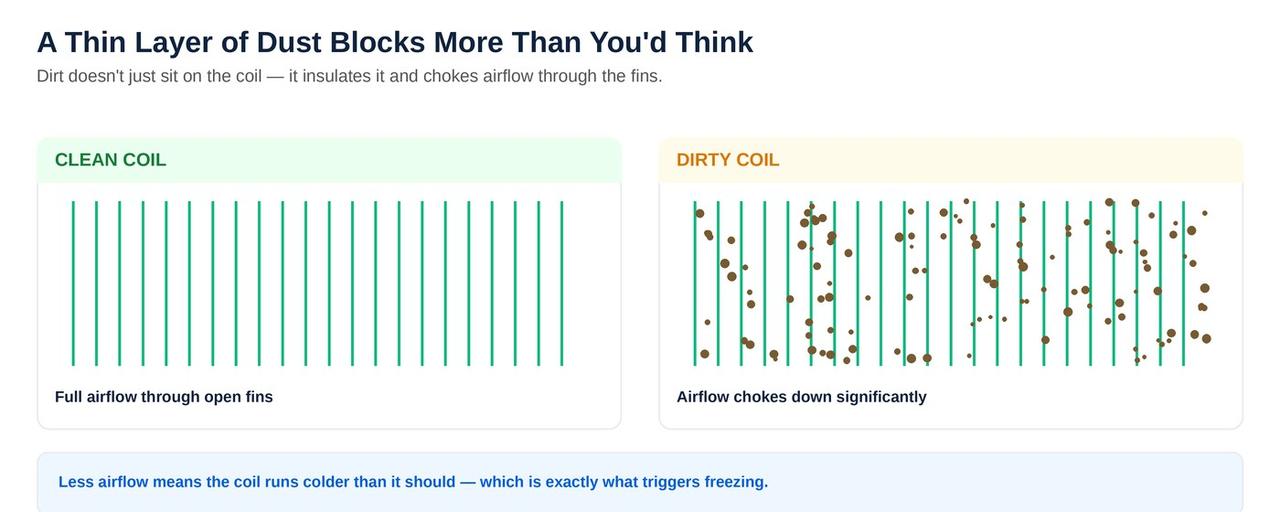
The coil fins are spaced closely together to maximize surface area for heat transfer. Even a thin, even layer of dust across all those fins adds up to a real airflow restriction — one that also insulates the coil from the air passing over it, making it run colder than it should.
Dirty Coil vs. Low Refrigerant
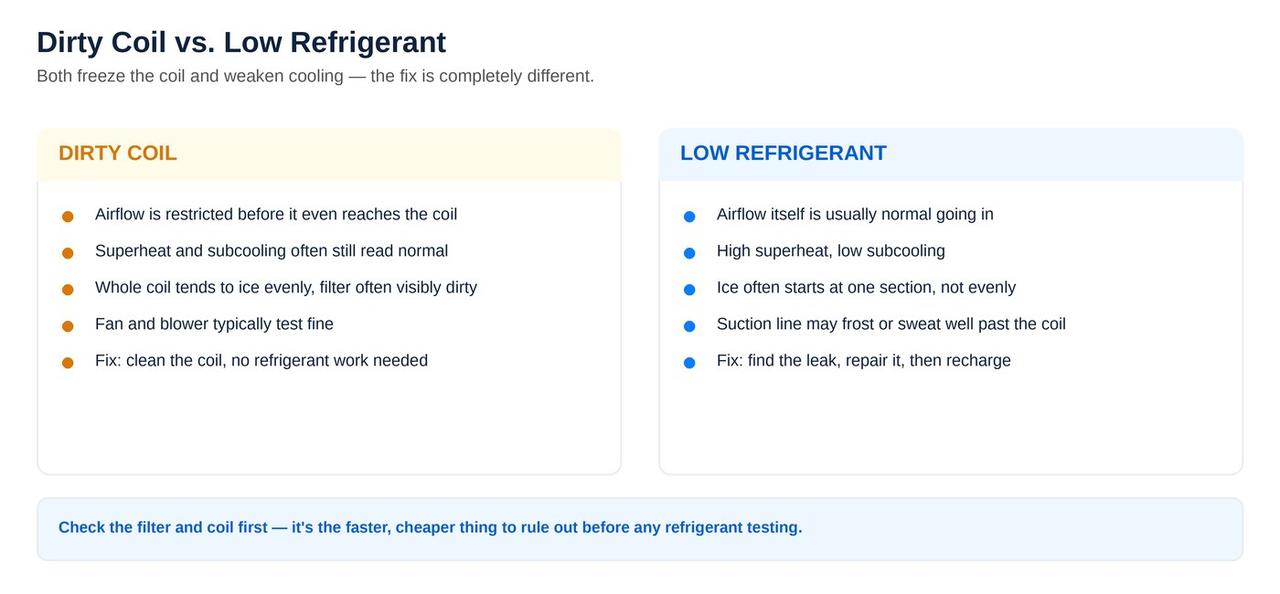
Read the low refrigerant symptoms guide. · Read why the evaporator coil freezes.
How a Technician Diagnoses a Dirty Coil
- Inspect the filter and its fit
- Visually inspect the coil for dirt or debris
- Measure total external static pressure
- Measure temperature split across the coil
- Check superheat and subcooling to rule out refrigerant issues
- Inspect for duct leaks pulling unfiltered air
How a Dirty Coil Is Cleaned
- Apply an approved no-rinse or rinse coil cleaner
- Gently clean between fins without bending them
- Flush and inspect the condensate drain while access is open
- Replace the filter with the correct size and rating
- Verify airflow and temperature split after cleaning
Can I Clean the Coil Myself?
Basic filter changes and vent maintenance are homeowner-safe. Full coil access typically means removing panels and working near refrigerant lines and electrical components, which is better left to a licensed technician — especially since bent fins or a nicked line can create new problems.
Repair or Replace?
A dirty coil almost always just needs cleaning — it's one of the most affordable AC issues to resolve. Replacement only becomes relevant if the coil has been so restricted for so long that it's caused separate compressor or refrigerant damage.
Weak Cooling in Spring or The Woodlands?
AC Repair Expo Heating & Cooling Inc inspects and cleans evaporator coils throughout Spring, The Woodlands, Tomball, Cypress, Conroe, Humble, Kingwood, and nearby North Houston.
- Static pressure testing
- Coil inspection and cleaning
- Filter fit and rating check
- Superheat and subcooling checks
- Duct leak inspection
Frequently Asked Questions
What are the symptoms of a dirty evaporator coil?
Weak airflow, ice on the coil or lines, high humidity, longer run times, rising energy bills, and sometimes a musty odor.
Can a dirty coil freeze up?
Yes. Restricted airflow can drop coil temperature low enough to freeze, even with correct refrigerant charge.
How is a dirty coil different from low refrigerant?
A dirty coil usually shows normal superheat and subcooling with even icing, while low refrigerant typically shows high superheat and low subcooling.
How often should the evaporator coil be cleaned?
It varies by household, but regular filter changes go a long way toward preventing buildup between cleanings.
Can I clean the coil myself?
Filter changes are homeowner-safe, but full coil cleaning is best left to a technician to avoid bent fins or line damage.
Does a dirty coil raise my electric bill?
Yes. Reduced efficiency means the system uses more energy for the same amount of cooling.
Can duct leaks cause a dirty coil?
Yes. Leaks that pull in unfiltered attic or crawlspace air bypass the filter entirely.
Is coil cleaning expensive?
It's one of the more affordable AC services, especially compared with the cost of ignoring it.
Can a dirty coil damage the compressor?
Over a long enough time, yes — restricted airflow and low suction pressure add stress to the system.
What MERV filter rating should I use?
It depends on your system's airflow design — a rating that's too high for your equipment can itself restrict airflow.
Will cleaning the coil fix high humidity?
Often yes, since a clean coil can remove moisture from the air much more effectively.
When should I call an HVAC technician?
Call if cooling feels weak, you notice ice on the coil or lines, or humidity indoors seems unusually high.